
Guide to Europe’s Microstates: Bonus – Gibraltar*
(*Gibraltar is not an independent country, but it’s still cool)
Quick facts (most recent available data)
Population: 29,752
Area: 6.8 sq km
GDP per capita (PPP): 43,000$

Visiting Gibraltar
Location and how to get there: Small peninsula located in Southern Spain. I drove from the Spanish city of Malaga, but you can also catch a flight from London. Map
Why visit? The British Overseas Territory’s most well-known landmark, the Rock of Gibraltar, hosts a cool nature reserve with Europe’s only population of free-roaming monkeys, cool cannons and military installations, defensive tunnels dug into rock and St Michael’s cave. The city below is an interesting mix of British, Spanish and Moroccan influences; there are great views of the coast of Africa from Europa Point, a cool little beach at Catalan Bay and more.
Recommended visit duration: 1-2 days
Fun facts:
- Spain claims Gibraltar as part of its territory; in turn, Spanish territory includes two enclaves in Morocco, which are claimed by the latter
- Gibraltar was ceded in “perpetuity” to Britain under the Treaty of Utrecht in 1713
- The official currency is the Gibraltar Pound issued by the Government of Gibraltar. Be sure to change your remaining Gibraltar Pounds before leaving, you won’t be able to after you leave
- There’s a 500-pound fine for feeding the monkeys
- The official language is English, but most residents also use Llanito, a dialect based on Andalusian Spanish with strong influences from English, Maltese, Portuguese and Italian.
Review of my trip to Gibraltar
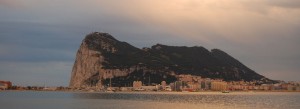
I couldn’t miss Gibraltar during my trip to Andorra. A short 1.5-hour drive from the Spanish city of Malaga, Gibraltar is a British Overseas Territory bordered by Spain and the Mediterranean. Coming from Spain, the first views of the Rock are impressive. I can’t help myself but stop at the nearest bus station to take some pictures.

Border controls crossing into Gibraltar are minimal. The city, located at the base of The Rock, is nice with narrow winding roads and a decidedly British feel. I take a quick evening walk on the pedestrianised Main Street to get a feel of the place.
Next morning a trip to the top of the Rock is the first thing on my mind. While waiting for the cable car to open, I check out the Alameda Botanical Gardens located close by – small but very nice.

After a quick trip by cable car, the Upper Rock Nature Reserve is open to exploration. Don’t make the mistake of clueless tourists that get the minibus tour; discovering the top of the rock by foot is much more interesting. The views from the top are stunning. Everyone admires the view and takes countless pictures.

As soon as I leave the cable-car station and the viewing platform, I’m almost on my own. Most tourists prefer the city below, and the few that come up usually take one of the minibus guided tours. As soon as I start exploring, the monkeys appear.

The ~300 or so Barbary Macaques thrive in Gibraltar, fed a diet of fruit and vegetables by local authorities (the monkeys were under the care of the British Army between 1915 and 1991). The monkeys are really cute and they seem well accustomed to people, minding their own (monkey) business.
The camera never tires of views of the city and the coast. Huge cannons and cool military installations dot the Upper Rock. Some of the cannons have their own engine and control rooms, which can be visited. I get my first views of Africa in the distance.
A tour of the nicely lit St. Michael’s Cave is next, followed by more exploration of the rock. There are excellent views of the airport runway which crosses the main car road entering Gibraltar. If you time it right, you can actually see cars stopped at traffic lights waiting for planes to land or take off.

I visit the Great Siege Tunnels dug into the rock by the British during the unsuccessful Great Siege of Gibraltar by the Spanish and French in 1779-1783. The Moorish castle built in 711 AD is next – a relic of the Moorish occupation of Gibraltar.
I descend back into the city and head for the Gibraltar Museum.
One of Gibraltar’s caves (Gorham’s Cave) is allegedly the location of the last remaining population of the Neanderthal Man before its extinction about 30,000 years ago; I find this fascinating. There’s an excellent book on the topic by local researcher Clive Finlayson. Unfortunately, the museum turns out to be disappointing on this topic.
After the museum I head to Europa Point, the southernmost part of Gibraltar for excellent views of the African Coast.

A picture-perfect lighthouse greets visitors.

Catalan Bay on the Eastern Coast is my last destination and it’s splendid: nice little beach with the imposing Rock in the background, colorful houses and plenty of nice and big seashells to take home as souvenirs.
See more pictures in my UK photo album:
More information available in the Gibraltar profiles on Wikipedia and Wikivoyage.
Keep reading: Monaco | San Marino | Vatican City | Malta | Luxembourg | Liechtenstein | Andorra | Gibraltar | SMOM